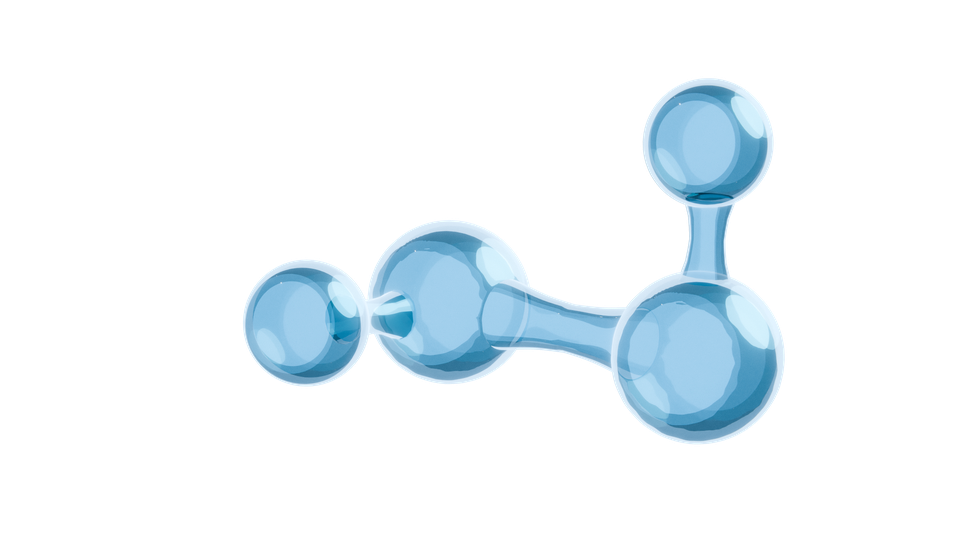
vH₂O₂ (vaporised hydrogen peroxide) matches formaldehyde's 6-log₁₀ kill rate with none of its carcinogenic residue, aerates in ~1 hour instead of 24+, and penetrates hidden cavities that line-of-sight UV-C can't reach — making it the only method on this page that's both NATO-approved and free of equipment-damaging residue.
| Criterion | vH₂O₂ | Formaldehyde | UV-C | Chlorine Dioxide |
|---|---|---|---|---|
| Microbial Kill Rate | 6-log₁₀ | 6-log₁₀ | 3–4-log₁₀ | 6-log₁₀ |
| Aeration Time | ~1 hour | 24+ hours | 0 minutes | 2–4 hours |
| Residual Toxicity | None (H₂O + O₂) | Carcinogenic | None | Chlorite residue |
| Surface Penetration | Full — 0.25 nm | Good | Line-of-sight only | Good |
| Equipment Damage Risk | None | High (corrosive) | None | Medium |
| NATO Approved | Yes | No | No | No |
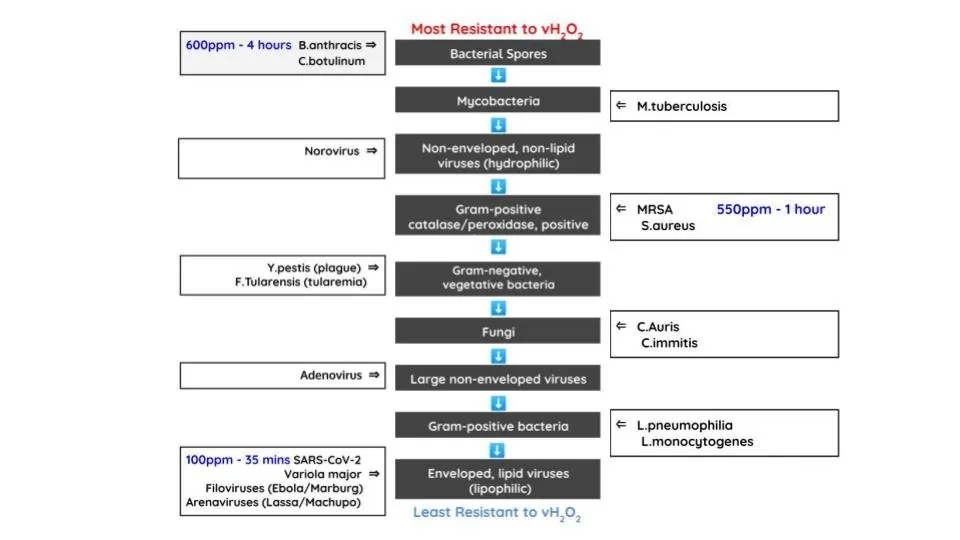
vH₂O₂ Microbial Resistance Scale
Full spectrum efficacy chart — bacteria, viruses, fungi, prions, and spores. 6-log₁₀ reduction validated across all categories.
Frequently Asked Questions
What is vH₂O₂ bio-decontamination?
vH₂O₂ (vaporised hydrogen peroxide, also called VHP) is a dry-gas sterilant that achieves 6-log₁₀ microbial reduction with full surface penetration and no line-of-sight limitation, decomposing into water vapour (H₂O) and oxygen (O₂).
How does vH₂O₂ compare to formaldehyde, UV-C, or chlorine dioxide?
vH₂O₂ delivers faster cycles, leaves no toxic residue (breaks down to water vapour H₂O and oxygen O₂), penetrates around the molecular scale (~0.25 nm), and requires no line-of-sight — unlike UV-C which is surface-only, formaldehyde which is carcinogenic, and chlorine dioxide which leaves chloride residues.
What microbial reduction does DECX achieve?
6-log₁₀ reduction (Sterility Assurance Level 10⁻⁶) across bacteria, viruses, fungi, prions, and spores.